
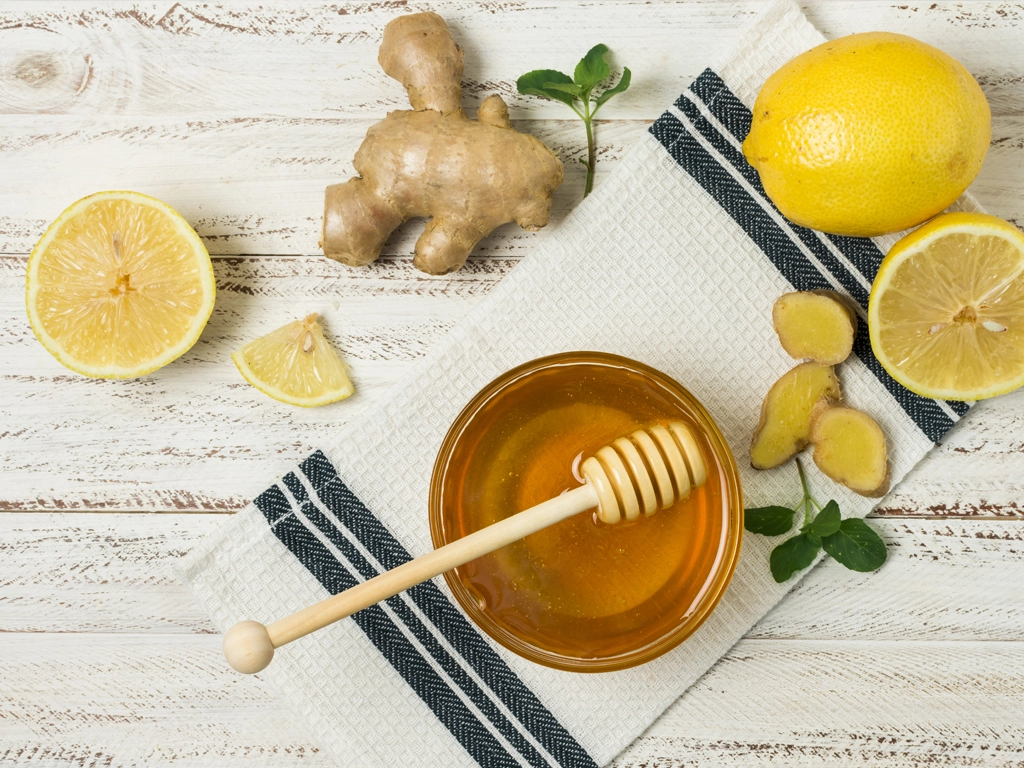
Honey (Apis mellifera Linn.)
A Rich History:
Avicenna (980-1037CE) describes honey as having cleansing properties, ‘It clears obstructions from the cavity that the cell walls enclose of the veins, removes moistures and absorbs fluids from the deep parts of the body.’
Chishti tells us honey is a ‘healing substance’ and goes on to recommend that it be used ‘wherever conceivably possible’ in the place of white refined sugar which should be eliminated from the diet.
‘The taking of honey each day is advised in order to keep the lymph flowing at it’s normal tempo and thus avoid degenerative disease which shortens life. The real value of honey is to maintain a normal flow of the tissue fluid called lymph. When this flow-rate slows down, then calcium and iron are precipitated as sediment. When the lymph flow is stagnant, then harmful micro-organisms invade the body and sickness appears’ D.C. Jarvis MD
Properties of Honey:
Easily digested: Sugar molecules in honey convert into fructose and glucose. Honey is easily digested despite its high acid content.
Rapidly diffuses through the blood; When accompanied by mild water, honey diffuses into the bloodstream in minutes. Its free sugar molecules make the brain function better since the brain is the largest consumer of glucose.
Antibacterial and Anti-inflammatory: Honey is exceedingly effective in painlessly cleaning up infection and dead cells and in the development of new tissues. The bactericidal property of honey is named “the inhibition effect.” There are various reasons for this anti-microbial property of honey; the high sugar content that limit the amount of water micro-organisms need for growth, its high acidity (low pH) and composition which deprive bacteria from nitrogen necessary for reproduction, the existence of hydrogen peroxide as well as antioxidants in the honey prevents bacteria growth.
Dr. Peter Molan, a leading researcher into honey for the last 20 years and a professor of biochemistry at New Zealand’s University of Waikato, says, ‘Randomized trials have shown that honey is more effective in controlling infection in burn wounds than silver sulphadiazine, the antibacterial ointment most widely used on burns in hospitals’.
Supports blood formation: Honey provides an important part of the energy needed by the body for blood formation. In addition, it helps in cleansing the blood. It has some positive effects in regulating and facilitating blood circulation. It also functions as a protection against capillary problems and arteriosclerosis.
Antioxidant: Antioxidants are the components in cells that get rid of harmful by-products of normal metabolic functions. These elements inhibit destructive chemical reactions that cause spoilage of food and many chronic illnesses. Researchers believe food products rich in antioxidants may prevent heart problems and cancer. Strong antioxidants are present in honey: Pinocembrin, pinobaxin, chrisin and galagin. Pinocembrin is an antioxidant that merely exists in the honey.
Therapeutic Uses:
Honey has been traditionally used for; headache, enuresis (the inability to control urination caused by the cold), teething, gingivitis, constipation, coughs and colds, dyspnea (shortness of breath), stomatitis (inflamed and sore mouth), discharging ears, furunculosis (recurring boils), excessive snoring, dyspepsia (indigestion), lethargy, inflammation and ulcers.
Please consult your Tibb Traditional Medicine practitioner for more information. Diabetics should exercise caution when considering the use of honey.
Sourcing:
It is generally advised when sourcing any foodstuff or medicament that one obtains the best quality available, preferably organic. In the case of honey, particularly when treating symptoms of an allergic nature i.e. ‘hayfever’ it is recommended that we obtain honey produced in our locale. With regard to Manuka honeys, which are considered one of the best quality in the world, and therefore are one of the most expensive, we are advised to obtain an example with a high (25) UMF (Unique Manuka Factor) rating indicating it’s anti-bacterial property.
Ultimately the best type of honey would be that which is locally sourced, freshly collected and raw.
Honey should not be heated above 40˚C.
Important Formulations: